



The Vynix Journal
Blue Light Glasses for Night Shift Workers: Which Lens and When?
Night-shift workers need light for alertness and safe work, then a different environment before daytime sleep. Use this timing-led guide to compare clear, orange and deep-red lenses.
SHIFT WORK / A TIMING-LED LENS GUIDE
Your night is
someone else’s day.
Night work creates two competing needs: enough light to stay alert and work safely, then a quieter light environment before daytime sleep. One lens is unlikely to be right for every stage.
The short answer
During active night work, Clear 30% is the least disruptive VYNIX option when you still need natural colour and visibility. Orange 60% may suit a non-safety-critical wind-down period near the end of a shift, while Deep Red 99% is best reserved for controlled at-home use after work. Do not wear orange or deep-red lenses for driving, clinical colour checks, machinery or hazard-sensitive tasks. Blue-light glasses do not treat shift-work sleep disorder or guarantee sleep.
Why “block as much blue light as possible” is the wrong night-shift rule
People working at night often need bright, well-designed lighting to remain alert, read accurately and avoid mistakes. Light is also one of the signals involved in circadian timing. Blocking more short-wavelength light for an entire shift can conflict with the immediate need to stay awake and perform safely.
The lens decision therefore changes across the night. At the start and busiest part of a shift, visual performance and alertness come first. Near the end—if the work is no longer safety-critical—a warmer lens may be acceptable. After the commute home, a deeper filter can be considered as one part of a broader wind-down routine.
Which lens fits each part of a night shift?
| Stage | Practical priority | VYNIX lens approach | Avoid |
|---|---|---|---|
| Before and early in the shift | Become alert, orient to the workplace and see colours accurately. | No filter, or Clear 30% if you want a low-colour-shift screen lens. | Starting with a heavy red tint when alertness and colour recognition matter. |
| Active work period | Safe movement, accurate reading and task performance. | Clear 30% only where ordinary eyewear is permitted and it does not interfere with required PPE. | Orange or Deep Red for machinery, driving, clinical checks or colour-coded systems. |
| Final non-critical tasks | Begin reducing stimulation without losing essential visibility. | Orange 60% may be considered for desk-based work if colour accuracy and hazard detection are not required. | Assuming stronger filtering is automatically healthier or safer. |
| Commute home | Maximum road awareness and correct vision. | Use suitable driving eyewear and any required prescription. In bright daylight, use road-appropriate sunglasses. | Orange 60% or Deep Red 99%. Do not use tinted blue-light lenses for driving. |
| At home before sleep | Create a calm, controlled routine after travel and essential tasks. | Orange 60% or Deep Red 99%, depending on desired filtering and tolerance for colour shift. | Expecting glasses alone to overcome noise, caffeine, room light or an unsuitable schedule. |
What each VYNIX lens changes
Clear 30%: the work-friendly option
Clear produces the least colour shift and is the most versatile of the three. It fits general computer work, meetings and screen-based administration better than orange or red. The 30% figure is the supplier-stated blue-light filtering level, not a promise of symptom relief or a measure of visible darkness.
Orange 60%: the transition option
Orange creates an obvious warm view and filters more of the stated blue-light range. It may fit the final part of a desk-based shift or the at-home period after the commute. It is unsuitable when blues, greens, warning lights, skin colour or display colours must be interpreted accurately.
Deep Red 99%: the controlled-environment option
Deep Red creates the strongest colour distortion and is intended for late-night or post-shift use in a safe environment. The 99% figure refers to supplier-stated blue-light filtering, not all visible light. Remove the glasses before stairs, outdoor travel or any task where the altered view creates risk.
For a direct side-by-side comparison, use the VYNIX guide to how much blue light glasses block. If your main concern is sleep, our guide to blue-light glasses and sleep sets out the evidence and limitations.
Choose around the job you actually do
Healthcare and laboratory shifts
Accurate colour, patient observation, labels and clinical displays can be critical. Clear is the only VYNIX lens colour worth considering during active work, and workplace requirements come first. Orange and red belong after the shift, not during patient care or specimen interpretation.
Warehousing, security and industrial work
Hazards, safety markings and moving equipment require an unaltered, adequately bright view. Blue-light glasses are not protective eyewear unless certified for the relevant task. Use required PPE and save coloured lenses for a safe, off-duty environment.
Drivers and mobile workers
Do not wear VYNIX Orange or Deep Red lenses while driving. Fatigue cannot be made safe with glasses. If you are too sleepy to drive, follow workplace and local safety procedures rather than relying on a filter.
Remote, creative and customer-support work
You have more flexibility if the work is stationary and non-critical. Clear can cover the main shift, with Orange considered for the last low-stakes hour. Deep Red makes more sense after signing off, once accurate colour and navigation are no longer needed.
Three frames, three filtering levels
The VYNIX blue-light range lets you choose the frame independently from the lens level. Tethys, Hestia and Helios are available in Clear 30%, Orange 60% and Deep Red 99%. The percentages are supplier-stated blue-light filtering figures.
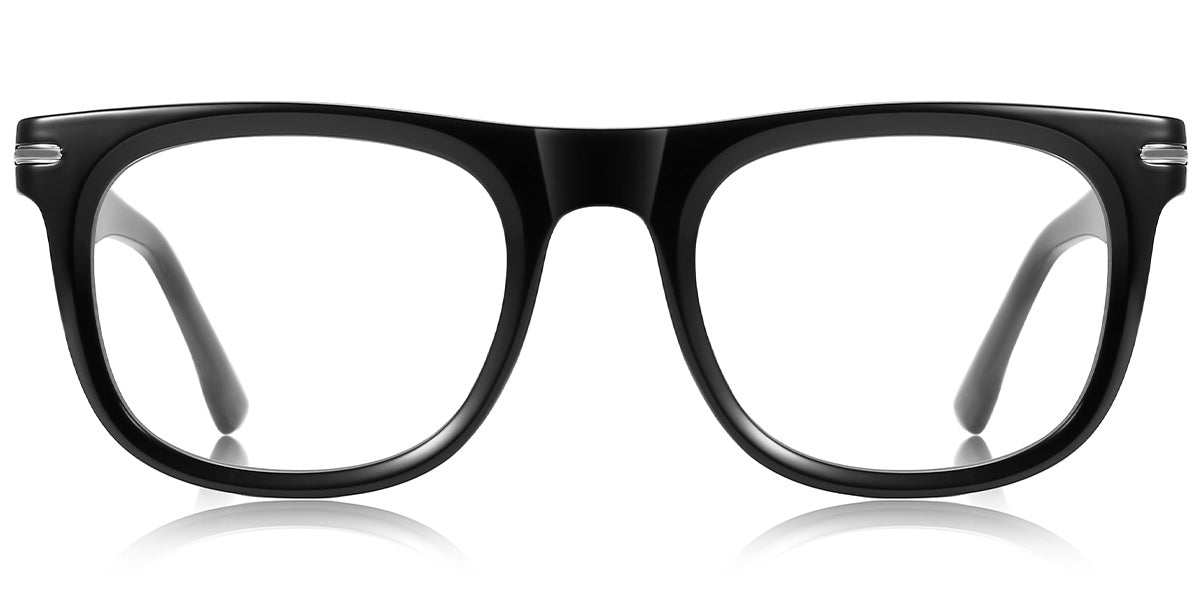
Tethys
A square everyday frame for workers who want to choose one filtering level around a specific stage of their routine.
View Tethys options ↗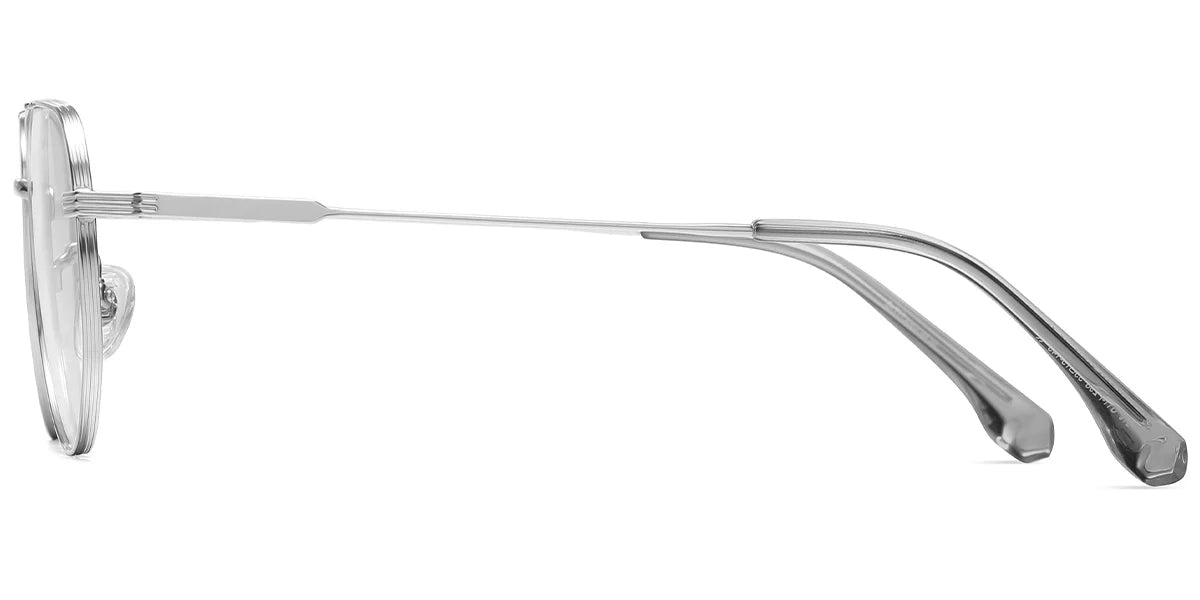
Hestia
A lightweight titanium-edition frame available across the same Clear, Orange and Deep Red lens system.
View Hestia options ↗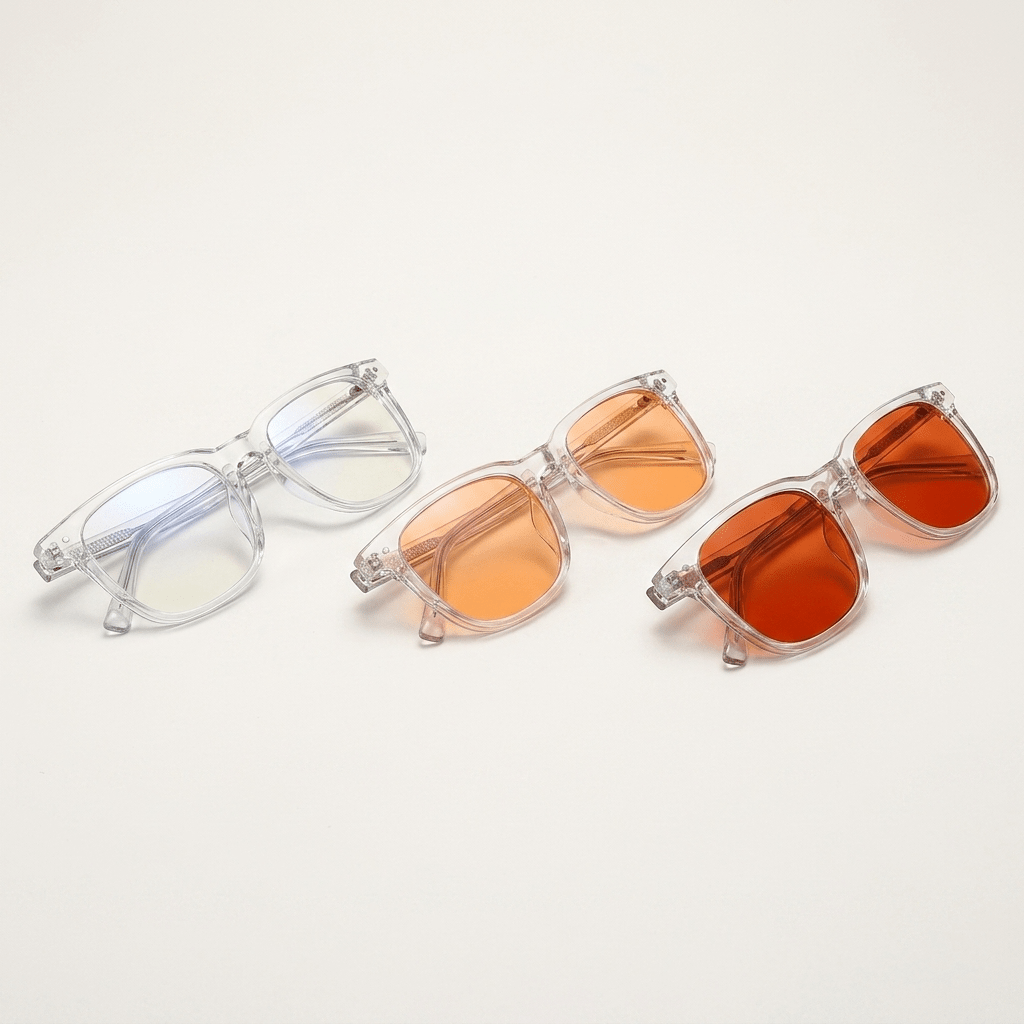
Helios
A modern statement frame for buyers who want their screen eyewear to look intentional on and off camera.
View Helios options ↗Build the routine before buying the strongest lens
Night-shift fatigue is bigger than eyewear. The US National Institute for Occupational Safety and Health describes shift work as working outside the usual daytime hours and notes the strain it can place on sleep and body rhythms.[1] A realistic routine may also involve planned light exposure, a dark and quiet bedroom, caffeine timing, consistent sleep opportunities and professional guidance when symptoms persist.
Use glasses for the small job they can perform: changing the spectrum reaching your eyes during a defined part of the routine. If the lens makes your work, commute or home environment less safe, it is the wrong lens for that moment.
Questions before you order
Should I wear red blue-light glasses for my whole night shift?
Usually not. Deep-red lenses strongly distort colour and may be unsuitable for active work. They are better reserved for a controlled, non-safety-critical period after work.
Which lens is best for a night-shift computer job?
Clear 30% is the most practical starting point because it changes colour the least. Orange may suit the final low-stakes part of the shift if accurate colour is not required.
Can blue-light glasses stop night-shift fatigue?
No. They do not replace adequate sleep, breaks, safe scheduling or medical care. Do not drive or operate machinery when dangerously sleepy.
Can I wear orange or red lenses on the drive home?
No. VYNIX Orange and Deep Red blue-light lenses are not driving eyewear. Use suitable road eyewear and required prescription correction.
Do blue-light glasses guarantee better daytime sleep?
No. Research has not established a guaranteed sleep benefit from blue-light filtering spectacle lenses. Bedroom conditions, timing, work schedule and individual health all matter.
YOUR NEXT STEP
Match the lens to one safe part of your shift.
Choose Clear for low colour shift, Orange for a warmer transition, or Deep Red for controlled at-home use. Then pick the VYNIX frame you will actually wear.
Shop blue-light glasses ↗Sources & further reading
-
NIOSH — Plain Language About Shiftwork
Overview of non-standard work hours, sleep and body-rhythm disruption. -
Cochrane — Blue-light filtering spectacle lenses
Systematic review covering visual performance, eye strain and sleep outcomes.
Written by VYNIX. General buying guidance, not medical, occupational-health or fatigue-management advice. Follow workplace rules and seek professional support for persistent sleep or vision problems.
Vynix sunglasses
Dark lenses for brighter days
Choose dark-tint polarised eyewear for harsh outdoor brightness and reflected glare. Some wearers find established floaters feel less distracting against bright backgrounds, but Vynix glasses do not remove or treat eye floaters.

Dione
- Dark-tint polarised lenses
- Reduces harsh reflected glare
- 100% UVA/UVB protection

Panoptes
- Dark-tint polarised lenses
- Reduces harsh reflected glare
- 100% UVA/UVB protection

Ananke
- Dark-tint polarised lenses
- Lightweight frame design
- 100% UVA/UVB protection
Vynix blue-light glasses
Choose the lens for your screen routine
Each featured frame is available with Clear 30%, Orange 60% or Deep Red 99% supplier-stated blue-light filtering. Choose by time of day, colour shift and the task in front of you.

Tethys
- Three blue-light lens options
- For work, gaming or evening use
- Choose the colour shift you prefer

Hestia
- Three blue-light lens options
- Lightweight metal construction
- Low, warm or deep colour shift

Helios
- Three blue-light lens options
- Double-sided anti-glare coating
- Designed for everyday screen use
 12 October 2026
FL-41 vs Blue Light Glasses: Which Should You Buy? -
 11 October 2026
FL-41 Migraine Glasses: How to Choose Rose Lenses
 09 October 2026
Can FL-41 Glasses Help Visual Snow? A Rose Lens Guide -
Vynix publishes straightforward guides about eye floaters, light sensitivity, glare and visual comfort. Our eyewear may make bright environments feel more comfortable, but it does not remove floaters or treat eye disease.